
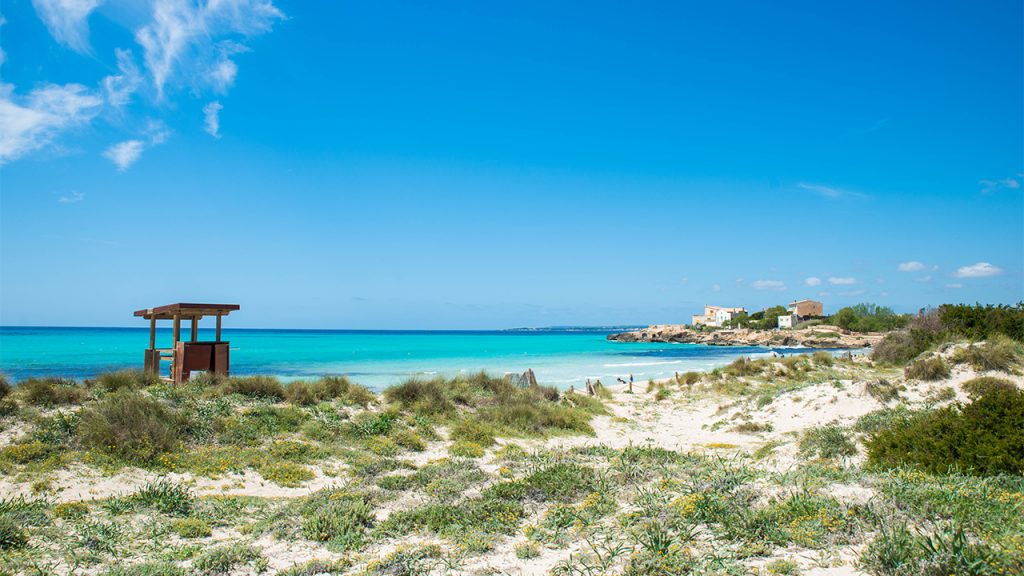
Es Trenc is renowned as one of Mallorca’s most famous beaches, captivating visitors with its picturesque landscape. With its crystalline turquoise waters and stretches of pristine white sand that span over 2 kilometers along the southern coast of the island, Es Trenc offers a slice of paradise reminiscent of the Caribbean.
Nestled between the vibrant beach resort town of Colonia San Jordi and the tranquil flatlands of Ses Salines, where the finest salt in the Balearic Islands is harvested, Es Trenc is a haven for nature enthusiasts seeking a remote and unspoiled environment. Its name, “Es Trenc,” meaning ‘ravine’ in the local language, hints at the rugged and untamed beauty that characterizes this beach.
Es Trenc attracts a diverse crowd, appealing to both young adults in their twenties and thirties as well as families. While the beach exudes a laid-back atmosphere, it also attracts older individuals seeking tranquility. Water sports options are limited here, allowing visitors to fully embrace the beach’s natural charm. There is only one main restaurant and a few chiringuitos, authentic Mallorcan-style beach bars that offer delightful casual dining experiences.
Beachgoers can rent lounge chairs and umbrellas, some of which are available through self-service systems. The vast expanse of Es Trenc ensures that there is ample space for everyone to find their own little patch of sand, though it’s advisable to bring an umbrella for shade, as there are no designated shaded areas. The absence of commercial and tourist activities further enhances the serene ambiance, allowing visitors to truly escape and unwind.
While Es Trenc is popular among tourists and locals alike, it’s not uncommon to encounter naturists, particularly further away from the main crowds. Facilities at the beach are limited, consisting of basic toilet facilities without showers or changing stations. It is advisable to come prepared with extra water and food, as there are no nearby shops or accommodations.
The true star of Es Trenc is its breathtaking water. The shallow and calm sea, occasionally dotted with gentle waves from the wind, showcases a mesmerizing clear blue hue that rivals the colors found in the Caribbean. As you stroll along the beach, you’ll be greeted by a picturesque backdrop of sand dunes, rocky formations, shrubs, and pine trees. These natural elements extend into the beautiful Salobrar de Campos, a sprawling 1500-hectare wetland area featuring salt flats, diverse bird species, and a small lake.
Es Trenc is not only a beach; it’s an immersive experience that connects visitors with the unspoiled beauty of Mallorca’s coastal landscape. Whether you seek relaxation, natural wonders, or simply a respite from the hustle and bustle of everyday life, Es Trenc promises a memorable and enchanting retreat.
A beach that almost wasn’t
When mass tourism arrived in Mallorca in the 1960s, hotels went up along the coastline with little regard for what was being lost. The Playa de Palma is the clearest example of what unchecked development looks like. But the southern coast of Mallorca escaped that fate — and the reason is surprisingly simple: the landowners didn’t want to sell.
Even when developers arrived with blank cheques, the families who owned these southern estates said no. They wanted to keep the land as it was. The result is what you see today — a protected natural park where the original landscape remains almost entirely intact. Pine forests, sand dunes, wetlands, salt flats. The Salobrar de Campos, a 1,500-hectare nature reserve behind the beach, is home to dozens of bird species including flamingos. The land is still privately owned, but permanently protected.
By car vs by boat — why it matters
Most visitors arrive by car. The road to Es Trenc has a paid car park several kilometres from the beach, and in July and August the queue starts long before you reach it. Once parked, you walk loaded with coolers, umbrellas and bags — then walk further along the sand to escape the crowd that forms right at the end of the car park path. The only other access points by land are Ses Covetes — where parking is nearly impossible — and Colonia de Sant Jordi, which leaves you with a 30-minute walk along the beach.
By boat, none of that exists. Sa Ràpita is the closest port to Es Trenc by sea — just 1.7 nautical miles, around 3 kilometres, roughly half the distance from any other nearby marina. No queue, no parking, no carrying anything.
The water is different from a boat
From a boat, approaching from the sea, you see Es Trenc’s turquoise colour before anyone on the beach does. The water temperature is also different — the sun warms the shallow water near the shore, but a few metres out, where the boats anchor at 3 to 4 metres depth, the water stays genuinely cool. One of the most refreshing swims in Mallorca.
The best anchorage in Mallorca
Es Trenc is one of the most popular anchorages on the island. The beach is entirely sandy with no posidonia seagrass beds, so you can anchor freely. The depth sits at 3 to 4 metres, the bottom is clean sand, and the bay is naturally sheltered from westerly winds. In July and August you’ll find hundreds of boats here from every corner of Europe. By sea, you can approach from either direction — from Ses Covetes to the west or Colonia de Sant Jordi to the east. The coastline is open to all.
When to go
Es Trenc is at its best from May to October. June and September offer a quieter experience with near-identical conditions to peak summer. The best time to arrive by boat is early morning — the water is flat, the light is beautiful, and you’ll have the anchorage to yourself. As Raimundo always says: the earlier, the prettier.
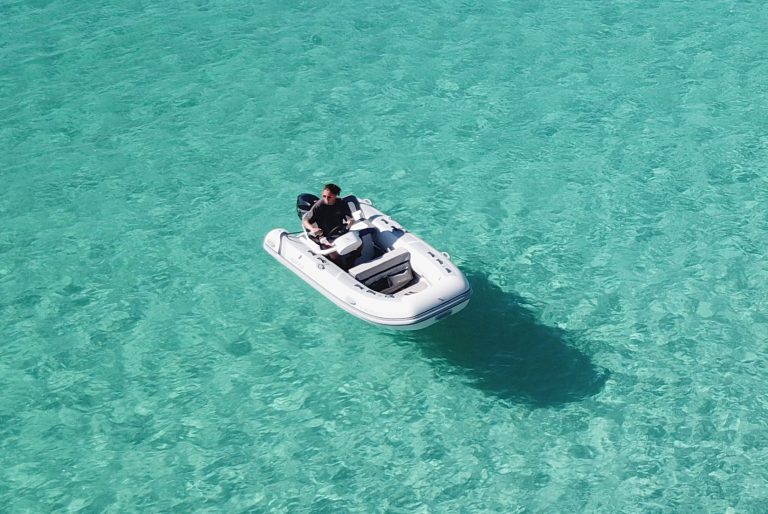
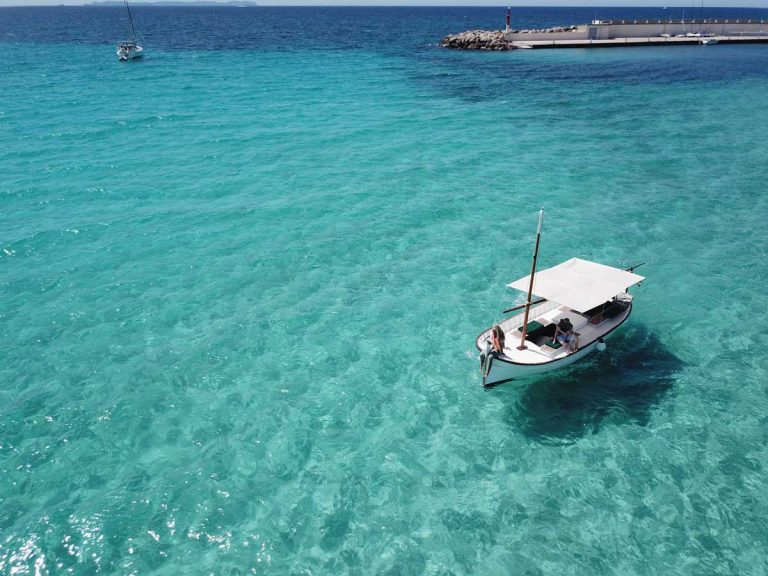
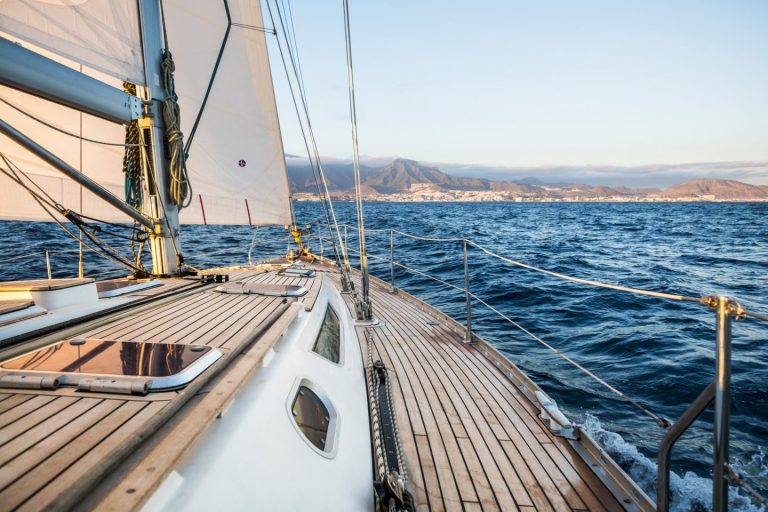
Rent one of our boats to explore Es Trenc
What people say about Rapita Charter
 Sam Krast28/08/2025
 Was a wonderful experience! Thank you
 Nick Webster23/08/2025We had a great morning and would definitely recommend. Lovely host that showed us how to get going and where to go. In the words of my partner "this is the best thing we have done in Spain". 😁 Will be doing it again asap!
 K A (Kev)19/08/2025Great Experience and very kind Instructors!
 Ricardo Cebreiros Ríos17/08/2025Muy buena experiencia, tanto la atención como la barquica fueron un 10. Pasamos una mañana estupenda, lo recomiendo al 100%.
 Paul TAUBE16/08/2025Netter Kontakt, alles super erklärt und es ist so schön einfach alleine mit dem Boot hinzufahren wo man will.
 Diego Ortiz Rodriguez10/08/2025Experiencia muy positiva. Raimundo está muy atento y te ofrece buenos consejos. La embarcación en perfecto estado y muy confiable y sin ningún tipo de problemas. Desde luego hace honor a su nombre "disfrutona"!
 Tania Segui10/08/2025Fue la sorpresa que elegí para el 50 cumpleaños de mi marido! Una experiencia increíble de la mano de Rapita Charter y Picnicdeal. Un dia de navegación precioso de 8 horas a bordo del precioso Arabian Horse a lo largo de Sa Rapita, S Estanyol, Es Trenc y Es Carbó! Raimundo es un capitán excepcional y muy agradable! Nos dio un exquisito trato y atención. Sin duda repetiremos!!! Gracias por todo Raimundo!
 Alejandro Henao Soto07/08/2025Me organizaron la celebración de mi 50 cumpleaños entre picnicdeal & rapita charter y solo puedo decir que fue una oncreíble experiencia a bordo del velero Arabian Horse. Todo absolutamente todo perfecto , la travesía el trato de Raimundo ( de 10) súper amable , atento , y sabiendo estar cuando tenía que estar y simpático. El paisaje de la costa y las aguas de Es Trenc, Es Carbó , S´Estanyol... fueron sin duda también espectaculares Sin duda experiencia a tener en cuenta si e quiere disfrutar de navegar.
 Thomas Kamke03/08/2025Tolle Bootstour bei Sonnenuntergang – mit kleinen Abstrichen Wir haben mit Rapita Charter - Lloguer d’embarcacions eine zweistündige Bootstour ab Sa Ràpita bis Colonia Sant Jordi unternommen und waren insgesamt sehr zufrieden. Der Kapitän machte einen souveränen Eindruck und strahlte trotz leichtem Wellengang Ruhe und Erfahrung aus – das hat uns ein gutes Gefühl gegeben. Das Highlight war ganz klar die Umgebung: kristallklares Wasser, weiche Abendsonne und eine entspannte Atmosphäre an Bord. Auch dass man eigene Snacks und Getränke mitbringen durfte, fanden wir super – zusätzlich gab es Wasser und Bier an Bord. Etwas Luft nach oben gibt es bei der inhaltlichen Begleitung der Tour: Ein paar Informationen zur Umgebung, kleine Anekdoten oder einfach ein bisschen Unterhaltung hätten das Erlebnis noch runder gemacht. Die Kommunikation im Vorfeld lief unkompliziert über WhatsApp, freundlich und offen – alles in allem also ein empfehlenswerter Ausflug mit viel Potenzial für Wiederholung.
 Alejandro Martí Camacho02/08/2025Muy buena experiencia! Muy divertida la disfrutona. RepetiremosGoogle rating score: 5.0 of 5, based on 126 reviews